


Space Ecosystem0:00
Rocket Lab.
Rocket Lab.
Rocket Lab.
Rocket Lab.
You know, we rang up Sinclair Interplanetary at that stage and said, "Doug, we need some reaction wheels." Doug said, "That's great, Pete, but it'll be 9 months." And I'm just like, Doug, I haven't got 9 months for anything.
So the way to solve that problem is we just went and bought Doug. You know, now we make over 2,000 reaction wheels a year. We recently did that launch for the Space Force, the rapid call-up launch, and they gave us 24 hours to integrate a satellite into a rocket, push it out to the pad, and launch.
You know, and we did it in 16 hours and 42 minutes. We go after those big prime contracts. Even if we lose, we still win. And when we win, we win twice. You know, we won an $800 million contract.
There were 2 other primes that also won contracts, but actually that turned into over a billion dollar contract for us because the primes needed their stuff. The nose cone shape of a LETRON, it's not actually the optimum aerodynamic shape.
The optimum aerodynamic shape looked inappropriate in my view.
Some people did the opposite of that and made it more inappropriate.
Allright, Sir Peter Beck.
Pete.
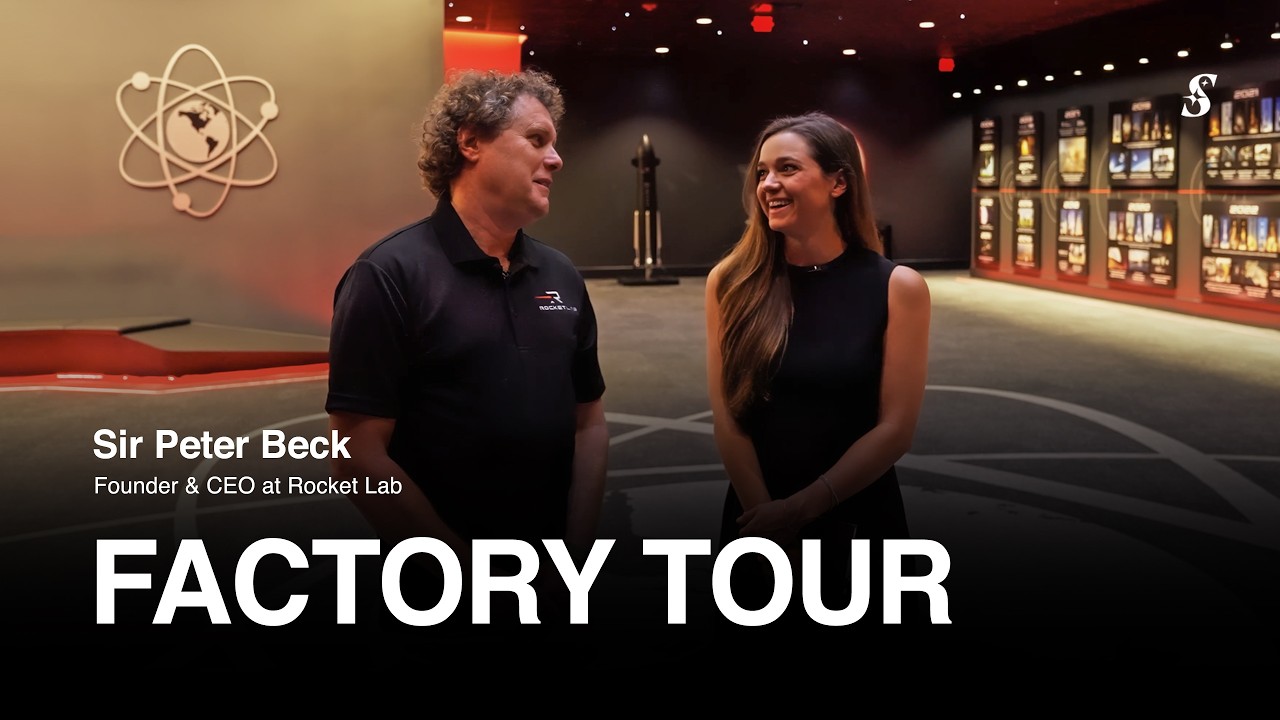
We are here yet again. We just completed a pretty comprehensive tour of your facility here in Long Beach, California.
Yep.
Thank you for having us.
Oh, super. Great pleasure. Awesome to be able to show you around.
And we're here just after a record earnings.
Mm.
So what happened this quarter?
Well, I mean, we, uh, we, you know, pretty much put nearly a billion dollars of backlog, um, you know, in the in the books. Had record revenue, um, and, you know, a whole bunch of growth everywhere and acquisitions and, uh, yeah, so it's been a it's been a busy old quarter.
We're going to get into all of that. But what I think was really interesting and amazing is you continue to make more acquisitions. You're strategically placing yourself far out of what people used to brand you as, as a launch company, but into an entire space ecosystem company.
So what is your plan there?
Yeah, I mean, um, when we when we kind of started that, um, you know, the Space Systems team, the first thing we did was try and go and buy a reaction wheel. And, um, you know, we rang up Sinclair Interplanetary at that stage and said, "Doug, we need some reaction wheels."
Doug said, "That's great, Pete. It'll be 9 months." And I'm just like, Doug, I haven't got 9 months for anything. Like, we need way, way faster than that. And, uh, so the way to solve that problem is we just went and bought Doug.
And then, you know, now we make over 2,000 reaction wheels a year. Um, and we just basically repeated that. Um, if you took a satellite and you laid it out on the boardroom table, we just pointed all the things that were were really painful and, um, went out and acquired the very best companies, or in some cases created the technology ourselves, and then just scaled it.
Um, and that puts us in a really unique position because, yes, we can build, you know, platforms at scale for other people, but, you know, we can also do that for ourselves.
What do you think the moat is now?
Well, launch is always a huge moat. So, you know, launch launch is, like, probably the biggest moat. But I would say the second biggest moat is, uh, is is those components to go into those spacecraft. Because you can have infinite capital, it doesn't make any difference.
You still need some star trackers and some reaction wheels, and they're just not available at scale.
What has it been like for you as you scale this company out, moving into this more manufacturing components era of Rocket Lab?
Well, it doesn't feel like anything's changed. Because if you take our first real product being the LETRON launch vehicle, everything in that launch vehicle, we design and we make. So every engine, every avionics box, every piece of software.
Um, so we kind of cut our teeth about how to be a, you know, a manufacturing company, um, you know, during that process. And then, you know, we hired our CEO, Frank Kline, who came from Mercedes and brought a whole bunch of that expertise as well.
And now I'd say we're at a scale where, you know, we have all the ERP systems and the MRP systems and, like, you know, the Rocket Lab system where, you know, even if we go and acquire a new company, we literally just pick those that system and people up and just plonk it in.
And it's like, you know, scale at a button sort of a thing.
What was the initial process for going and doing so many strategic acquisitions as a way to grow? What was your thinking behind that?
Well, it was it was, as you say, the strategic. Um, you know, I've always viewed the large space companies are going to have the ability to build their own satellites and launch them. And, um, if you're beholden to someone else providing you all the critical components, then your ability to scale is governed by their ability to scale, and that's not a place where you want to be.
So, um, so for us, it was just it was just sensible. And, um, you know, at the time, I remember a lot of folks were saying, "Well, why are you buying this this company in Albuquerque and this company in, in, like, Toronto and that makes these little things, these little widgets?"
And then I think, you know, it's very obvious now that those are the widgets are the things that truly enable, you know, center scale for some of this some of the space infrastructure.
Iridium5:04
Let's talk about Iridium.
Mm-hmm.
Because that was a big recent acquisition.
Yep.
Why did you make that acquisition, and how does that change the future state of the company?
Yeah, it's funny because I thought everybody would have picked that well early,right? Um, and I was I was surprised that people were surprised that we would be doing that. Because if you just think about it logically and you stand back and you go, "Okay, what is the biggest TAM in the space industry?"
It's comms. Okay? If you ignore broadband, because, you know, two really well-capitalized people are taking care of that, if you ignore broadband, what's the next logical thing to do in comms? And it's like, you know, safety-critical, defense-critical services.
That is Iridium. And, you know, it's a super quintessential Rocket Lab deal. Like, we don't we don't come with hopes and dreams and bore a big hole in the P&L. Like, Iridium, you know, adds profitability to the entity straight away.
It also buys us time to put up a new constellation. So it's like it's it's literally the quintessential Rocket Lab deal. Like, we don't we don't buy companies that are, like, startups that maybe they'll do something one day.
It's like, you have to be proven and successful, and then you're theright kind of target for us.
What's really amazing is you're pretty much one of three companies now that is doing successful commercial launches, and you're expanding out into new territories. What does this mean for you against Blue Origin and SpaceX?
Well, I think they're both, um, both got their own ambitions and, uh, some further along than others. Um, I think it would be very difficult to go and play in the broadband market. I think, you know, you see the amount of capital that's required to be successful there.
And, um, so, you know, like I said before, we're we're a we're is a good a good place to play. And, you know, in that out-of-band spectrum that, you know, penetrating through, you know, rain and weather and buildings, you can just do stuff.
It's physics. Like, you can just do stuff that, like, the more broadband spectrum can't do. So, you know, acquiring that spectrum, super important. Acquiring that business, super important. And it really gives us a great platform to go and scale and really provide, you know, a lot of applications.
But I think Rocket Lab is not the out-of-band safety-critical comms company. Like, that is number one. Um, and there'll be many, many more after that.
Acquisitions7:22
You've made I mean, I think, like, not to hambwire on this too much, but you've made several, what is it, 7 acquisitions at this point?
Mm.
That have well integrated into the company and been successful. So what is your process with that? How do you create such, like, a seamless motion?
Well, I'm I'm glad it looks like that. It's like the duck on the pond, you know, with the little feet flat out. It feels a little bit like that. Um, no no acquisition and integration is easy. Like, there's no small one.
Um, but it does help in the fact that we're extremely picky. Um, and, uh, we like to we like to acquire companies that we've worked with. Um, you know, all of the component companies, we've basically used them, um, in the past in our own systems.
Um, and, you know, so those relationships and the understanding of those teams. If you look across all of those component acquisitions, there's one thing that is, like, all written on the top of their boards, and that is 100% mission success.
There's no, like, you know, "Let's be fast and near enough." It's always 100% mission success. Like, you know, Solero Solar never had a solar panel fail in orbit in 40 years. Doug Sinclair in reaction wheels, same again. PSC never had a failure, separation system failure.
So you you you have to be of that mindset to to be able to integrate with Rocket Lab. From a diligence perspective, I guess generally we know the team.
Mm.
Um, there's been a couple of times we knew them know them less well, but typically it's like we've selected them for a program or we've worked with them for many years. So in that respect, like, the diligence doesn't take a huge amount of time.
Um, we know we know sort of a little bit what we're getting. Um, and then, um, the integration playbook, I would say, has evolved over time. Uh, you know, uh, at the very beginning, we, um, you know, we were very, very light touch.
And I would say now I think we have a much, much more well-oiled machine where day one, like, there is literally a day one in the playbook and day one the walls are black, the snack machines are in, Rocket Lab t-shirts are on, and we go, you know, throttles wide open.
I mean, we we were we've been kind of we've been touring the building. We've been driving around in the golf cart. Everybody's wearing your merch.
Mm.
Is this required?
No.
No?
No, you have to like, you get a set of merch when you come, but, um, most of the most of the team buy it. Yeah.
Really?
Yeah. And I think that's a great, uh, a great kind of metric for the for a company. It's like, how proud are your employees to work here? Um, I think, um, all the successful companies, uh, in my opinion at least, their their their employees feel like, you know, they're they're really part of it and they're really, really proud of it.
We talked about this in the tour, but this is one piece of many pieces.
Many pieces.
Of Rocket Lab globally.
Global Footprint10:02
Yep.
You're an international rocket sensation.
Yep.
And galactic.
Yep. The lawyers hate me saying it, but global domination is definitely part of the plan.
We love global domination.
Yep. Yep. Underrated. So we start off in New Zealand. Um, so there's the there's the, um, LETRON factory in New Zealand. There's the launch pad in New Zealand, well, the launch site where there's two launch pads. Uh, and then we have a small small team in Australia, um, and mainly in business development.
Uh, and then we start off here in California. Um, we have these two facilities in in California. Then we have, uh, Rocket Lab Optical Systems in, uh, in in Tucson. Um, and then, uh, Albuquerque, we have our solar plant.
Um, and then, uh, Toronto, we have our reaction wheels. Stennis, we have our, um, engine test facility. Middle River, we have, uh, NEUTRON, uh, facility. Maryland, uh, we have separation systems. Virginia, we have launch pad. Uh, Germany, we have, um, our optical terminal business.
Um, and I'm sure I've forgotten one or two, but yes.
Were these through acquisitions or, like.
Some, somewhere, yeah. Some, yeah. Mo some most of those were acquisitions. Like, Stennis, obviously not. Um, uh, and Middle River, obviously not, but, um, but somewhere, yeah.
I want to go back to the beginning of how you built this all out because the top three countries for launch are the US, China, and New Zealand. And you created a monopoly on launch in New Zealand. So what was that process like for you?
How did you.
Mm.
I will say write the laws there.
Um, well, I mean, at the end of the day, it was, um, if you have a small launch vehicle, um, and you turn up to a large launch pad, um, the reality is that, um, you know, the fees don't change.
New Zealand11:39
And when you're trying to sell a rocket for, like, $8 million, you can't have $1.5 million worth of launch fees. On a $50 million rocket, it doesn't make any difference,right? So, um, we were really like, we were very early on, it's like, in order for this to be financially viable, we need our own launch site.
Mm.
And, um, you know, building your own launch site in the States was was non-trivial. Um, it was non-trivial in New Zealand as well. But, um, but, you know, ultimately, we we felt it was, you know, easier to do that in in in New Zealand.
And to your point, um, New Zealand had no space industry. So sometimes it's easier to start something from scratch and formulate it in a way that best makes sense than to try and integrate with a whole bunch of rules that don't don't fit.
Is this why you got Knighted?
Um, one of the one of the reasons, yeah, creating a space industry and.
What was that like?
Very weird.
Really?
Yep. Super weird.
Why?
Well, I mean, I'm look, I I'm just I just like to build rockets and, um, uh, it's it's great for your mum and stuff like that, but, um, uh, you know, a lot of people do a lot of amazing things.
And, and, you know, it's it's it's like, it's it's an amazing thing. I the way I look at it, it's like really for the whole team and and entrepreneurs in New Zealand. Um, but, um, you know, grateful restaurant, um, reservations.
But, um, but yeah. But no, I think, yeah, it's a very humbling experience.
This episode is brought to you by Brex. My favorite. You become what you spend on. And I refuse to spend my time on work that shouldn't exist. Expense reports, receipt chasing, and manual closes. The company is building what's next from Vercel, OpenAI, Anthropic, Granola, and Deepgram, all made the same call.
They all run on Brex. Brex is the intelligent finance platform that combines cards, expenses, and banking into a single stack with agentic finance built in. AI agents that handle expenses automatically, enforce policy before spend happens, and close your books in minutes.
That's why Sourcery runs on Brex, so I can spend time on building and not busywork. It's time to get Brex AF. Learn more at brex.com/sourcery. That's B-R-E-X.com/S-O-U-R-C-E-R-Y. Bye. Turing is training the next generation of AI with tasks that require real expertise and real-world judgment.
That's why companies like NVIDIA, Anthropic, Salesforce, and Gemini partner with Turing. Turing builds realistic reinforcement learning environments and data systems based on real operational traces, the kind of infrastructure frontier labs need to train superintelligence. Visit https://turing.com/sourcery.
Why is New Zealand geographically advantageous for launch?
Uh, so, I mean, the launch LC1 is a very unique position that we can launch sun synchronous and also sort of out to mid inclination out of the one site. So here in the States, if you want to go sun synchronous, you generally have to go out of the west coast.
And if you want to go mid inclination, you have to go out of the east coast. So we get a huge swath of, um, you know, of Azmuth. And there's one plane, uh, one one plane every three days that we have to worry about.
Really?
That's it. Whereas in the US here, of course, you're shutting down to tremendous airspace and it's a big deal and everyone, you know, it's like, it's a real thing.
Mm.
So, uh, in New Zealand, there's just nothing there. So it's very easy to, you know, to launch. And we're able to do things like, you know, we recently did their, um, their launch with the Space Force, the rapid call-up launch, and they gave us 24 hours to call a, you know, integrate a satellite into a rocket, push it out to the pad, and launch.
Um, you know, and we did it in 16 hours and 42 minutes.
That's insane. And there's nothing below you but Antarctica.
No. No, there's there's nothing at all. Like, Chile is the when we're out mid inclination, sun synchronous, like, it's Antarctica or Chile. So yeah, it's.
Is Chile actually that close?
No, it's miles away. Like, it's halfway around the planet. So yes, there is nothing. There's absolutely nothing. Which is great, but also, you know, we had to build an entire industry from from scratch in New Zealand. Like, there was no suppliers, no infrastructure, nothing.
We had to build absolutely everything.
Is it more expensive there because of that?
No, I would say we control our own destiny very, very well. So, um, no.
No. Did you find the pyramids in Antarctica yet?
No. I've I haven't been haven't had a good look, to be fair.
Okay.
So it might be under the sun. I don't know.
Amazing. Because you had such a big earnings.
Mm.
You had record earnings this quarter, if you didn't know that.
Yeah, but we had the record last last earnings as well, and probably the one before that, so.
Well, I guess before we get there, you went public before other space companies, one of them that recently went public. I don't know if you know SpaceX.
Going Public16:43
I heard of them.
Well, what was it like and why did you make the decision?
Nice to do something before Elon for once, that's for sure.
Well, what was the process and why did you choose to go public when you did?
Yeah, so, um, for a number of reasons. One, um, you know, if you can reach a certain level of maturity and go public.
Mm.
Um, the capital capital markets enable you to do things you couldn't do in private markets. Buying Iridium, like, we could have never ever done that as a private company. So, um, you know, it was it was theright time for us to become a public company.
And then the other part of it, which is a little bit selfish, is I didn't want to build a space company that just lives for the lifetime that I'm running it. It needed to be multi-generational and go on and on and on and on.
And being a public company really enforces that discipline of profitability. And profitability is survival. You know, the the rockets and satellites and it's all cool, but at the end of the day, it's all for nothing if your economics aren't there and you're not profitable.
So for future founders that are thinking about going public and trying to time the markets, which I've learned from our partnership with the New York Stock Exchange.
Yes, sir.
Is not something you can really do.
You can't do. No.
Do you have any advice for founders?
Yeah, I mean, do it for theright reasons. Like, um, the worst thing you can do is is go public because you can't raise capital privately. Like, we never had an issue raising capital privately. I mean, we can probably we couldn't have raised the quantum of capital privately, so there needs to be an inflection point.
But I think a lot of public a lot of companies went public during that spec time because they they they were just crap companies and they couldn't raise capital privately, so their only option was to be a public company.
That's never a good reason to be a public company. And, um, you like, being a public company is is like, it's a lot of work and there's a lot of constraints come on you and it's it's like, probably way less fun, but, um, it gives you a set of resources you didn't have before.
So make sure you need those resources. If you don't need those resources, then don't do it. Um, so yeah, that would be my advice is do it for theright reasons and make sure you're ready to do it.
How do you handle the ride and the swings of the public markets, especially when you do so well and they punish you for it?
You just go home and cry a little bit. Yeah. No, I mean, look, um, I I'm focused on the longer term.
Mm.
And and like, um, you know, uh, NEUTRON delays are always, you know, a question that's that that always andrightly so, people should be should be riding as hard for that. But at the end of the day, I'm I'm not going to say it doesn't matter, but, you know, how how late was LETRON to the market?
I don't know.
Nobody knows.
Yeah.
Because it doesn't matter. Um, it was late too. But the the the point being is, like, um, the most important thing here is is, like, what happens in the next five to ten years.
Mm.
Because that that is that is, like, that is where we we go from where we are today to being really, really big. And, um, you know, making sure all of the pieces of the puzzle are lined up, all the pieces of chess and the chess board are in theright place is super important.
And that's why, you know, as we started acquiring these component companies for satellites, it's like, each piece of, you know, each chess piece on the board to make sure that when it came time to do something like Iridium or or more, we're ready to go.
Mm. On the tour, you did walk us through the engines. You walked us through Electron.
Neutron20:05
Yes.
We saw the machines. This is the number one question a lot of people have been asking me.
Mm.
And I'm sure you're probably tired of getting asked it, but why is NEUTRON still facing delays?
Yeah. Um, it's a great question. I mean, it's a rocket program, and I think every rocket CEO is, um, is is probably inflicted with the same, um, you know, optimism than than every than reality. Um, but I would say that, um, I'm being really strategic about how we bring NEUTRON to market.
Mm.
So it's one thing to put a rocket on the pad and just fly it once. I mean, that that's super important, don't get me wrong. But I guess the question that that investors and analysts should be asking me is, like, "Pete, when's the 10th rocket going to be on the pad?
How quick can we get the 10th rocket on the pad?" Because by the time you get to rocket 10, your reusability's sorted, all your production's sorted, you're banging out whole stages, and, you know, all of the all the the launch infrastructure is just is just, you know, cranking and all the rest of it.
And, like, your first rocket on the pad is hard, but making sure you can scale quickly after that first rocket is the most important thing because it would really be bad if, like, we put the first rocket on the pad and then it was, like, two years before we went and put the, you know, the next one on the pad, which happens, um, more often than not.
I just don't want to be there. So I'm I want to make sure that we, you know, after flight one, we can really scale and ramp quickly because, you know, launch is constrained for everybody else. Um, launch is constrained for our, you know, government customers.
I'm now my own user of launch for Iridium. I I need launch too. So I'm, like, my harshest customer. So, um, you know, making sure we can get through that scaling quickly is really, really important.
And so with Archimedes, which is going to be powering NEUTRON.
Mm-hmm.
You're using a different design for this one versus your competitors. Why did you make that decision?
Yeah, so the NEUTRON vehicle is composite. Um, and, um, so it's it's like, everything is a giant engineering compromise in the rocket world. And if you fill a room up with engineers, um, from every discipline, if one of those engineers from one of those disciplines is happy, you have failed.
Like, everybody needs to be equally as miserable. Then you know you've got theright design because it's just this giant compromise. And one of the compromises we made is, like, you know, we want, um, the Archimedes engine to be incredibly reliable, and we don't want to have to service that engine, you know, from multiple flights.
So, um, we make super lightweight structures and and, like, super low-stressed engines. Now, if you make heavy structures, then you have to make super high-performance engines. So you'd be lazy on your structures and, like, really difficult on your engine.
Or you can be really lazy on your engine and really difficult on your structures. So, you know, we we build everything out of carbon, so naturally, our propensity is to be super high-performance structures. And, you know, we have a lot of experience with the material.
So it was sort of the natural choice to to make NEUTRON out of composite.
You stressed us a bunch on the tour when we were looking at the engines and what kind of factors you had to lay into the reusability.
Mm.
And how you're going to design that differently because you have to use it. Again, it doesn't just burn up for five seconds.
Exactly.
And then go away.
Yep.
So what kind of decisions did you make there?
Well, I mean, I made a constraint at the very early part of the program where I think I lost a lot of credibility with the engineers. And I and I said, "Look, guys, we need to be able to turn this vehicle in 24 hours," which is, I'll admit, is a stupid constraint.
But what that constraint did is it it drove a whole bunch of really, really important design decisions like, you know, propellants, engine lights, um, you know, you know, structures. The hungry hippo theory came out of that because it's like, "Guys, we don't have you've got 24 hours to fish a fairing out of the ocean, recondition it, blow all the salt water out of it, and get it back on a rocket."
It's like, that's not going to work. So, you know, that one what that one, you know, requirement drove the design for the hungry here hungry hippo fairing, so we never throw away a fairing. So sometimes you've got to be cruel to be nice.
And that was that was an example where we put this unrealistic constraint on the team, but it drove a whole lot of goodness everywhere out you know, everywhere out throughout the vehicle.
This is a very difficult business you found yourself in. How do you handle all the challenges?
Impact24:25
Um, well, I think if you want an easy life, you do not become a rocket CEO. That is there's a far easier pathway to a a low-stress life than that. But, um, but no, it's it's it's super fun, super meaningful.
I mean, it's like every founder, you know, they they they do it because they believe in the outcome of of the business. And I think one of the cool things about space is that you get to touch so many people.
Um, and, you know, people don't realize that how much they rely on space infrastructure. Um, and, you know, if you if you order a pizza, um, the GPS got it there. Like, your tinder date knows where to turn up because your GPS got them there.
So there's a tremendous amount of space infrastructure in our everyday lives that everybody uses and just doesn't realize, you know, that they're using it. So it's kind of ridiculous that you can put a little box of electronics up in the sky and and really have so much impact to everybody down on Earth.
And at the end of the day, you know, that's probably what gets me out of bed the most is, like, the only thing my parents said growing up is you can do whatever you want, but have the most amount of impact with your life possible.
So, you know, that's that's how I feel like I can deliver on that.
You've talked about building this as a multi-generational company. Do you envision your kids taking over?
Absolutely not.
No?
Absolutely not.
Why?
No nepotism in the Beck family whatsoever. No. They have to go on path, chart their own paths. There's there's absolutely not.
What are they going to do?
Well, we'll see. I mean, my son's very much into into motor racing and, you know, my daughter into into performance. So, you know, none of them have have chosen boring paths themselves.
Yeah.
So we'll see how they go.
What if they get interested and they turn around and they're like, "Oh, wait, I want to take over the rocket company. This is pretty cool, Dad."
Well, that's just way too tough. That's just not happening. Absolutely not.
That's great.
Today's episode is sponsored by VCX by Fundrise, the public ticker for private tech, allowing investors of all sizes to invest in venture capital. Learn more at getvcx.com. Some of you may not have heard this yet, but our sponsor Public just launched something called Generated Assets, and it brings AI into investing in a way I've honestly never seen before.
Here's how it works. You type in an idea like AI-powered supply chain companies with positive free cash flow or defense tech companies growing revenue over 25% year over year. Public's AI then dispatches a swarm of agents that scan every single US stock, evaluates them, and instantly builds a custom index around your thesis.
What really stands out is how clearly it explains why each stock is included. And before you invest, you can even backtest your idea against the S&P 500, so you're making decisions with real context, not just guessing. And beyond Generated Assets, Public lets you invest in stocks, bonds, options, crypto, all in one place.
They'll even give you an uncapped 1% match when you transfer your investments over from another platform. If you want to build a portfolio that actually reflects your thesis, visit public.com/sourcery, paid for by Public Investing. Full disclosures in the description.
Founders scale faster on Deel. Set up payroll for any country in minutes, hire anyone anywhere, get visas handled fast, and get back to building. Visit deel.com/sourcery. That's D-E-E-L.com/sourcery.
Okay, so to go back to the earnings, you had huge announcements. You closed very large contracts.
Earnings27:39
Yep.
I'll list them out for you. You're probably tired of talking about them, but okay, so you have $580M in space contracts.
Mm.
Space system contracts, $437M in launch contracts.
Mm.
But of those contracts, one of them is for Flatellite.
Yeah.
Can you speak through Flatellite and explain to the crowd what that is?
Yeah, so the Flatellite is actually a really important platform for us because that will be the platform that we, um, scale future our own future constellations off. So it's a you know, I mean, if you ever come to New Zealand, you'll drive down the road and you'll see creeks named Creek One, and then the next creek will be Creek Two.
So, you know, it's it's maybe it's a little bit of a New Zealand thing. We're not very imaginative in our names.
Yeah.
But, you know, it was a satellite and it was flat, and it was like, "Flatellite, that's got to be the name." But, I mean, it is a flat format, um, and it's, you know, it's a it's a high-density format that's specifically tailored for for the NEUTRON vehicle.
But, um, you know, I think what the big deal about that is is, yes, it was our first kind of, um, you know, scaled Flatellite deal, but it was it's not for some janky mission. It's, like, for a, you know, a defense a really important national security defense mission.
Mm.
So, um, I think that says a lot about, you know, the government customers and, you know, where they where they kind of rank abil rank Rocket Lab's ability to deliver new stuff.
Defense has become a prime mover for you internally.
Yeah.
How do you think about the different categories that you service?
Yeah, so we we we play in areas where we think, um, that that we can be disruptive and and can add real, um, value over over others. Um, national security is is one of those areas that I think has been typically pretty well underserved.
Um, and, you know, the the the typical national security, um, contract would go to your typical primes cost plus, you know, blowout in times and blowout in money and all the rest of it. And, um, we're just not built like that.
And, um, you know, when we when we go out into into the national security world, um, you know, it's firm fixed price, and, you know, we we deliver. And, and, you know, that that's that's a different paradigm to some of these customers.
And I would say that, um, even when we go after those big prime contracts I mean, we're prime on two national security programsright now. Even when we go after being a prime, even if we lose, we still win.
And when we win, we win twice because we'll go head to head with a prime, uh, for a contract, and if we lose, then the next day, there's a whole bunch of purchase orders for for Reaction Wheels and Solar and and a whole bunch of stuff.
And then when we win, um, and there's there's there's us and other primes win, you know, we win twice. Um, you know, our our SDA contract was a great example where, you know, we won an $800M contract. There was two other primes that also won contracts, but actually, that turned into over $1 billion contract for us because the primes needed their stuff.
Damn. That worked pretty well.
It's good.
One of the other announcements that you had during this earnings was for Ghost.
Yes.
Can you explain what Ghost is? I found this completely fascinating.
Yeah, so, um, uh, essentially, uh, you know, obviously, we've got three launch sites, um, for for the ELECTRON vehicle. And, uh, you know, our government customers, um, mainly around the HACE missions, were were really keen to see, um, you know, us going to very discreet locations, uh, to do some of that testing.
So it sort of it was driven from a requirement from the customer that, "Can can you build this mobile launch site?" And, um, you know, now that we're doing NEUTRON, we're like, even the smallest thing needs a crane.
You look at a an ELECTRON launch pad, and it's tiny now. So it's like, moving stuff around is not a big deal for us anymore. So it's pretty pretty elementary for us to to build these mobile launch sites and flunk them down.
As a rocket space company CEO, I have to ask you, have you seen aliens?
Aliens31:31
Oh, no, I have not seen aliens.
No?
No. No. I mean, I think I think, statistically speaking, it would be it would be naive to think that there aren't other, you know, life forms out in the universe. And obviously, we've got our Venus life-finding mission to have a have a look in the clouds of Venus for some some signs of life.
But I don't know. I I've got a slightly different take on what life may be in the universe because I think we we look at we look at life through a very narrow lens. If you look at the human time scale, it's ridiculously short compared to everything around us.
Like, this concrete floor is going to outlive us by, like, 100 times. Like, this concrete floor maybe in 1,000 years would still be there. Whereas the human time scale measures it in, like, 80 years. Nothing in the universe is measured in 80-year increments.
It's measured in, like, million-year increments. So the way I think about looking for life in the universe, I don't think there'll be, like, little, you know, watery sack kind of people floating through the universe. I think it's, you know, most likely, you know, evolved into some kind of, you know, either hardware silicon or maybe even just signal because if you want to if you want to travel the universe, you know, this is not happening.
Like, this is totally useless. And then, okay, maybe a piece of silicon's better, but that's still why why are you moving hardware? Why not just do consciousness with signal? So I think, you know, if you think about stuff in the time span of the universe, you know, the signals aren't going to be in hertz.
They could be one cycle in a million years. So I think we're probably looking at everything in the wrong time scale.
What is.
Probably a bigger answer than you expected.
That's a huge that's a great answer. That's a huge answer. Um, as we close out, I have two last questions, but bringing it back to today and a smaller time scale.
Outlook33:15
Mm. Yep.
What are you most looking forward to in the next 6 to 12 months? I don't know what kind of increments you work by. Some of these AI companies work in weeks.
Yeah.
Some work in years.
Yeah.
I don't know the difference.
No, I mean, it's com it's very well understood here, like, a rocket lab year's a dog year. So, you know, people will start in this company, they'll work three months, and they'll say, "Oh, I've been here for, like, a year."
They haven't. They just haven't. So it is a long it's a very long time frame. Look, um, I know all focus is on NEUTRON and as as it should be, and, you know, I'm looking forward to getting that thing to the pad and and scaling it.
Um, but NEUTRON is one element of the big the big piece. It's an important element.
Mm-hmm.
But, um, I think, you know, what I'm looking forward to in the next 6 to 12 months, you know, getting that that Iridium deal all tucked in and onto the next. And, um, you know, we we there'll be a series of, like, transformational things that I that I've got my eyes on that I think it's really important to do over the next few years.
Amazing. Well, you've made it 20 years.
Ugh. Feels remember my comment about dog years?
Yeah.
Can you imagine that? It feels like a long time, but yes.
It's a long time.
Yep.
Philosophy34:30
As you've made it this far, I'm really curious because you have a very distinctive background versus other space CEOs.
Mm.
You've really worked to get this company up and running. I like to ask this question. It's a partner question.
Yeah.
So one of our partners is Brex are all about performance.
Mm-hmm.
Spending smarter, moving faster. And I do think a core component of performance is who you surround yourself by. Some people say it's your closest five friends.
Mm.
It could be a mentor. It could be some figure that you've had growing up that you look up to. Um, I'm curious, who are those people for you?
That's a great question. Um, it's funny because I have a I don't have a very wide friend group, and I never, ever bring rocket like, bring work home because if you like, I've always thought if you have a rubbish day at work, like, the last thing you want to do is bring that to somebody and ruin someone else's day.
But I think, um, I I draw inspiration from not, like, singular people, but from a wide variety of sources all the time. I mean, I think the the the people that I find most inspirational are the people who just work.
And, you know, and that that doesn't need to be some high-floating person. Like, somebody is doing working three jobs out there to put food on their table. That's an inspiration to me. You know, someone who's really, really grinding it to try and get ahead.
That's an inspiration to me. So, you know, I don't really have any mentors or any people that I just sit there and idolize and look up to. I think I just I just draw the the the stuff out of out of, you know, all the amazing people that you see around us all the time.
So I know it's a bit of a cop out of a an answer, but it's the honest the honest truth. I mean, um, you know, so many people have so many amazing qualities.
I mean, I did hear you've never read a business book before.
No. No.
So what are your operating principles?
Just do logical things.
Mm.
Like, at the end of the day, I think business is like a game of chess. It's it's just it's it's fairly logical. Um, there's there there's some parts of it that are illogical. Like, you know, government is nonlinear, so you can put an input into a government, and you just never know what you're going to get out.
But for the most part, business is pretty basic. I mean, it they're they're they're pretty logical. Like, make money and, you know, that's that's pretty straightforward sort of concept.
Some people forget that that is the purpose of a business.
Yeah.
Especially when they're overfunded.
Yeah, yeah, yeah. But I mean, and and in the space industry, it's all it's very easy to get wrapped up into the cool stuff, and we do get to do cool stuff. And there's plenty of examples of things that, um, you know, probably don't make a lot of sense.
Like, you know, the the Archimedes engine is black. I make them paint them black because it looks cool.
Mm-hmm.
There's no there's no logical I mean, I can come up with an emissivity reason why they should be black. But, um, you know, there's some sometimes there is those little elements, but and that's fine on the small scale, but I think, um, you know, it's really important to to, end of the day, remember that, like, in order to do this cool stuff, you have to make money.
Is there anything else that you've done, like painting the engine black?
Uh, yep. Um, so the hungry the the nose cone shape of ELECTRON is that shape. It's not actually the optimum aerodynamic shape.
Really?
No. The optimum aerodynamic shape looked inappropriate in my view.
Really?
So I changed the shape to a more of an extended ojive just to make it look a little bit nicer.
Some people did the opposite of that and made it more inappropriate.
Yeah.
Sir Peter Beck.
Thank you.
Thank you very much, Pete.
Thanks.
For showing us around and taking us on a tour and letting us spend the day here at Rocket Lab.
My pleasure. Thanks very much for coming.
Amazing.
Cool.
Awesome.
Thanks.
Hey, it's Molly. If you enjoy our interviews, check out our newsletter, Sourcery.vc, where we deliver a once-a-week top deals and tech headlines email and also go deeper on our podcast interviews. Subscribe to Sourcery today. And don't forget to subscribe to the podcast on YouTube, Spotify, Apple, or wherever you listen.
Link in description to sign up.