
Artificial Intelligence
Episodes from Sourcery with Molly O'Shea about Artificial Intelligence.
9 episodes
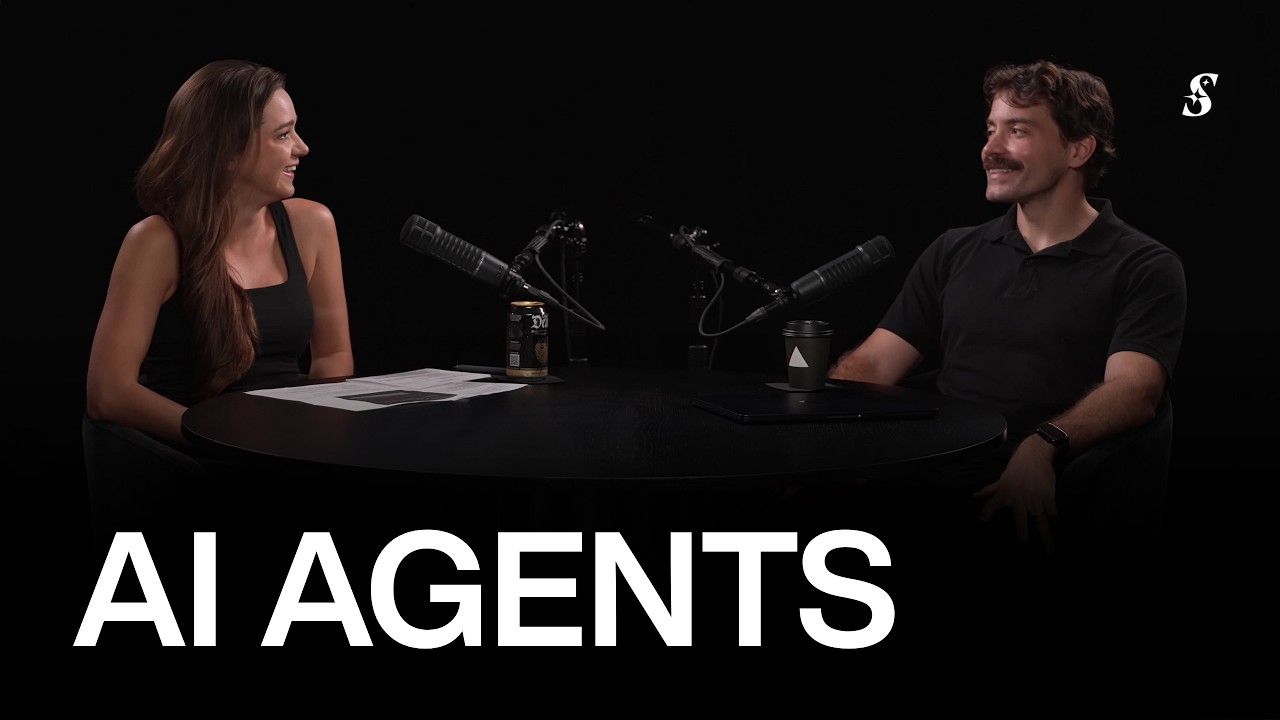
60% of Vercel Deployments Are Now Shipped by AI Agents
Oct 16, 2026 · 1:29:09
Vercel CEO Guillermo Rauch argues AI agents, not humans, are becoming the internet's primary users — and Vercel the infrastructure they choose. Coding agents went from 3% to 60% of Vercel deployments in a year, and the $9.3B-valued company reports $600M annualized revenue and 485,000 paying teams. He says engineers now manage agents like engineering managers, enterprises will generate personalized software instead of buying SaaS while Salesforce survives as data infrastructure, and websites must retool for agents via MCP. Vercel's AI Gateway shows 80% of tokens flow to open models — frontier labs, he argues, face fleeting loyalty and crypto-like froth. He details a $1M sandbox bounty that surfaced a critical Linux vulnerability and predicts fluid compute as serverless's next chapter.
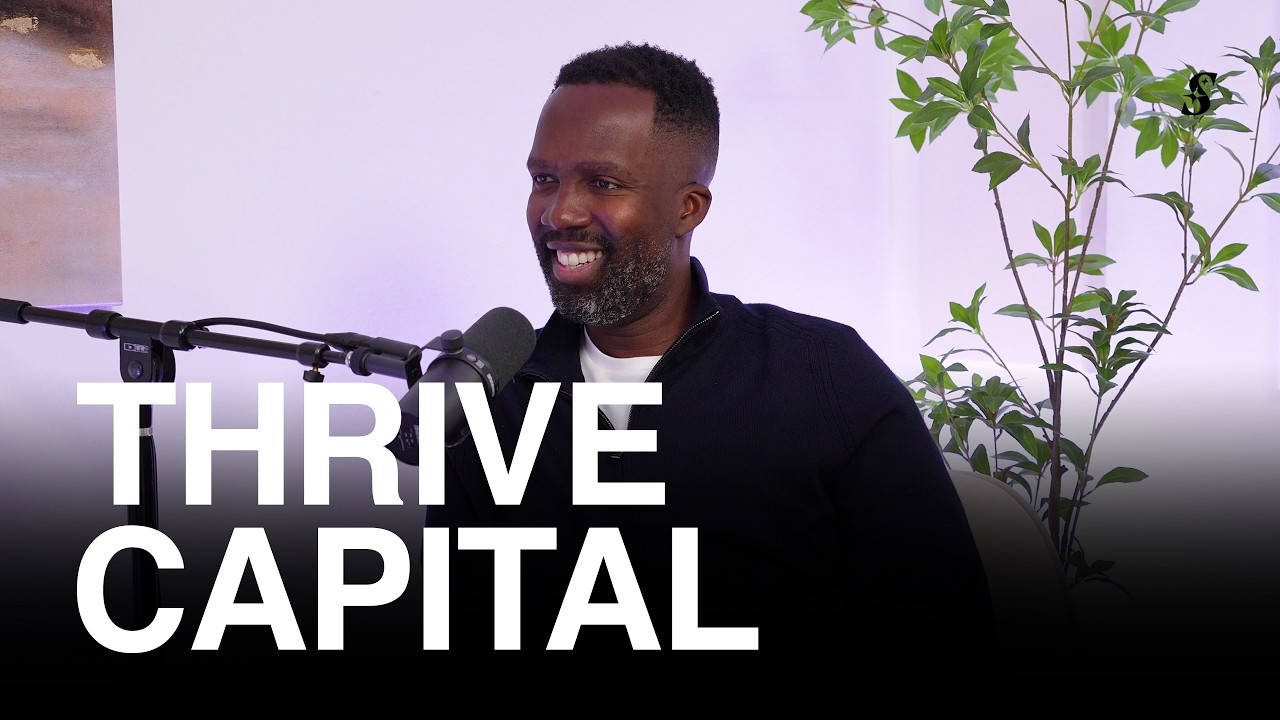
Thrive Capital’s Dr. Nworah Ayogu on Why Neuralink Is More Interesting Than SpaceX
Oct 14, 2026 · 1:10:25
Dr. Nworah Ayogu, physician and Partner at Thrive Capital, argues AI's most important breakthroughs will happen in medicine, pointing to portfolio companies like Isomorphic Labs, Neuralink, OpenEvidence, and Cadence. He explains how Isomorphic Labs could cut drug development from 10 years to 4, and why Neuralink—more interesting than SpaceX, he argues—insources everything from neurosurgical robots to pathology labs. OpenEvidence reached two-thirds of US physicians in three years versus Epic's sub-50% share after 40. He details Cadence cutting hospitalizations 25% and saving Medicare $2.5M weekly, OpenAI's 300 million weekly health questions, and $40 trillion spent over a decade with no life expectancy gains, closing with his case that America needs a 10X nurse more than a 10X engineer.

Perplexity CEO: SMBs Could Drive the Next Economic Boom
Oct 12, 2026 · 54:45
Perplexity CEO Aravind Srinivas tells Molly O'Shea that the next wave of American economic growth will come from smaller, AI-native companies, and that his model-neutral agent platform is built to serve them. He traces Perplexity's evolution from answer engine to Perplexity Computer, citing 5x revenue growth and one solopreneur spending over $1M annually while making $3M. He argues AI products have recursive effects, not network effects, so user depth beats user counts. He explains local and hybrid AI with NVIDIA and Apple, rules out building Perplexity data centers, and describes sovereign deployments for data-wary governments. He ends with his hiring-by-trials method, Larry Page's 'user is never wrong' philosophy, and his bet on long-horizon agents turning everyone into a scientist.

USV’s New $900M Fund: Fred Wilson, Rebecca Kaden & Mike Mignano
Oct 8, 2026 · 1:25:14
Union Square Ventures partners Fred Wilson, Rebecca Kaden and Mike Mignano explain why the firm broke its small-fund discipline to raise $900M, its largest fund cycle ever, as bigger AI outcomes and costlier rounds demand larger checks. Wilson says AI today looks like the internet in 2003: infrastructure is built, but defining applications remain unbuilt. The partners detail 'obliterate, don't automate'—an AI lawyer, accountant or doctor instead of a human one—arguing incumbents can't copy it because it cannibalizes their business. Wilson calls ARR a 'fake metric,' favoring usage retention, and says single-digit-billion exits still return well at USV's fund size. The 'Rebel Alliance' thesis backs open-source AI infrastructure, and Mignano argues chatbots won't replace the user interface.

Stripe’s John Collison: AI Agents Will Rewire the Internet
Oct 5, 2026 · 28:01
Stripe co-founder John Collison tells host Molly O'Shea that AI agents will rewire commerce, calling computer use the "ultimate backwards compatibility layer" for the real world. Collison says Stripe processed $1.9 trillion in 2025, up 34%, and almost no one now integrates its API by hand, so Stripe is rebuilding for "AI ergonomics" rather than developer ergonomics. He argues AI discovery will reshuffle merchants the way Facebook ad targeting did, predicts more breaches over the next five years, and says Stripe deems January 1, 2026 the start of its "singularity epoch." He explains the Bridge, Privy, Metronome and OpenRouter acquisitions—crypto, usage-based billing, model routing—and internal AI wins like legal agents. His 17-year lessons: no shortcuts, stickwithness, users first.

We’re Reaching the Physical Limits of Chips
Sep 30, 2026 · 13:41
Molly O'Shea asks what comes after the GPU with Steven Latré, VP of AI at imec, and Adam Chambers of Strike Capital, who argue that AI's real bottlenecks now sit in memory, power, cooling and data transfer rather than compute. Latré says the world's biggest chipmakers come through imec's unique Belgian clean room years before chips ship, that transistors at roughly one nanometer are at the end of physics of Moore's Law scaling, and that the era of ever-bigger models — from 175 billion to 10 trillion parameters — is ending. Chambers notes only Micron, SK Hynix and Samsung make 95% of memory — prices rose 700% this year — and calls photonics the key technology likely to win, moving from pluggable optics to co-packaged optics near the GPU. Latré's hottest take: in 5-10 years we'll laugh at today's LLMs like dial-up internet.

The Wildest Hot Takes From the All-In Summit 2026
Sep 27, 2026 · 47:20
At the All-In Summit 2026, Brad Gerstner of Altimeter says the AI safety debate is settling into a pragmatic consensus around independent peer review, while Naveen Rao of Unconventional AI claims his chips are thousands of times more efficient and calls software near-worthless in 20 years. Jonathan Neman of Sweetgreen argues AI won't kill you but ultra-processed food will. Toby Rice of EQT forecasts 20 to 40% more natural gas demand from AI power generation. Kent Draper of IREN says compute demand far exceeds supply, Wen Sang of Genspark says don't slow AI down, Geoff Woo of Anti Fund denies free will, Nick Shirley calls California's $200 billion high-speed rail wasteful, Jake Paul wants the Constitution updated, and Michael Brandt of Ketone-IQ calls the human body the next tech platform.
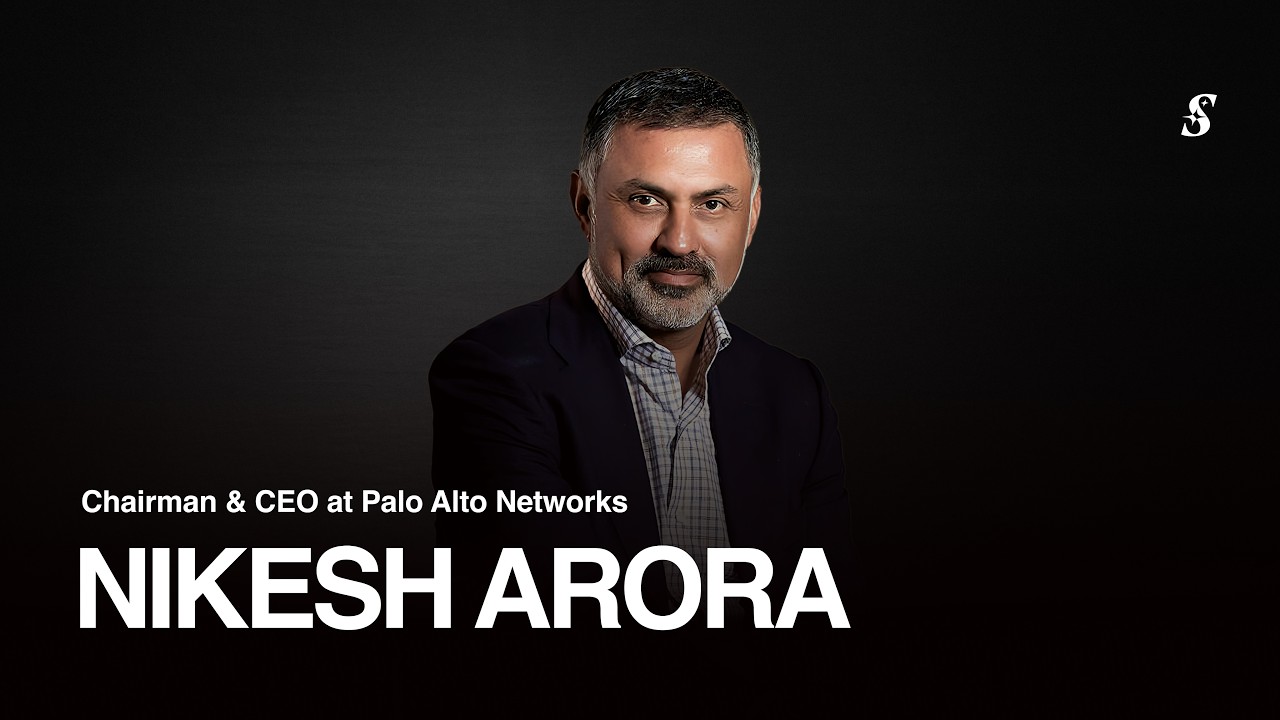
Nikesh Arora: $300B, 40 Acquisitions, Still Paranoid
Aug 17, 2026 · 59:10
Nikesh Arora, chairman and CEO of Palo Alto Networks, argues the AI cybersecurity boom is only beginning, with AI attacks compressing vulnerability-to-exploit time from 55 days to minutes. He details Palo Alto’s new 4-hour patch capability, explains why he signed Jensen Huang’s open-source AI letter, predicts the entire software industry will be rewritten in 10 years, and breaks down the playbook behind 40+ acquisitions in eight years, including the $28 billion CyberArk deal. He also describes hiring AI-native talent through hackathons, defends LinkedIn as a scouting tool, and shares lessons from Larry Page at Google and Masayoshi Son at SoftBank—including doubling down on winners. He expects market gyrations ahead but insists AI demand, and security’s role, is unstoppable.

Inside AppLovin’s $100B Ad Engine
Aug 14, 2026 · 1:26:38
AppLovin CEO Adam Foroughi and CTO Giovanni Ge explain how AppLovin rebuilt its ad engine with Axon 2 after a 92% post-IPO stock drop, driving recovery from $5.5B to a $100B+ company. Ge details replacing tree-based models with neural embeddings so predictions became more accurate and GPU-cheaper, and says Axon 2's success came from deciding what not to build. Foroughi describes keeping engineering at ~100 people, using AI to elevate rather than replace engineers, expanding from mobile gaming into e-commerce via a napkin-designed data pipeline, and moving ads into connected TV and open web. They discuss why AI-generated ads need human guardrails, why taste matters more than building speed, and the path to a trillion-dollar valuation requiring $30B+ annual cash flow, plus buybacks during the downturn.
Powered by PodHood