
Claude
ProductA product discussed on Sourcery with Molly O'Shea.
3 episodes
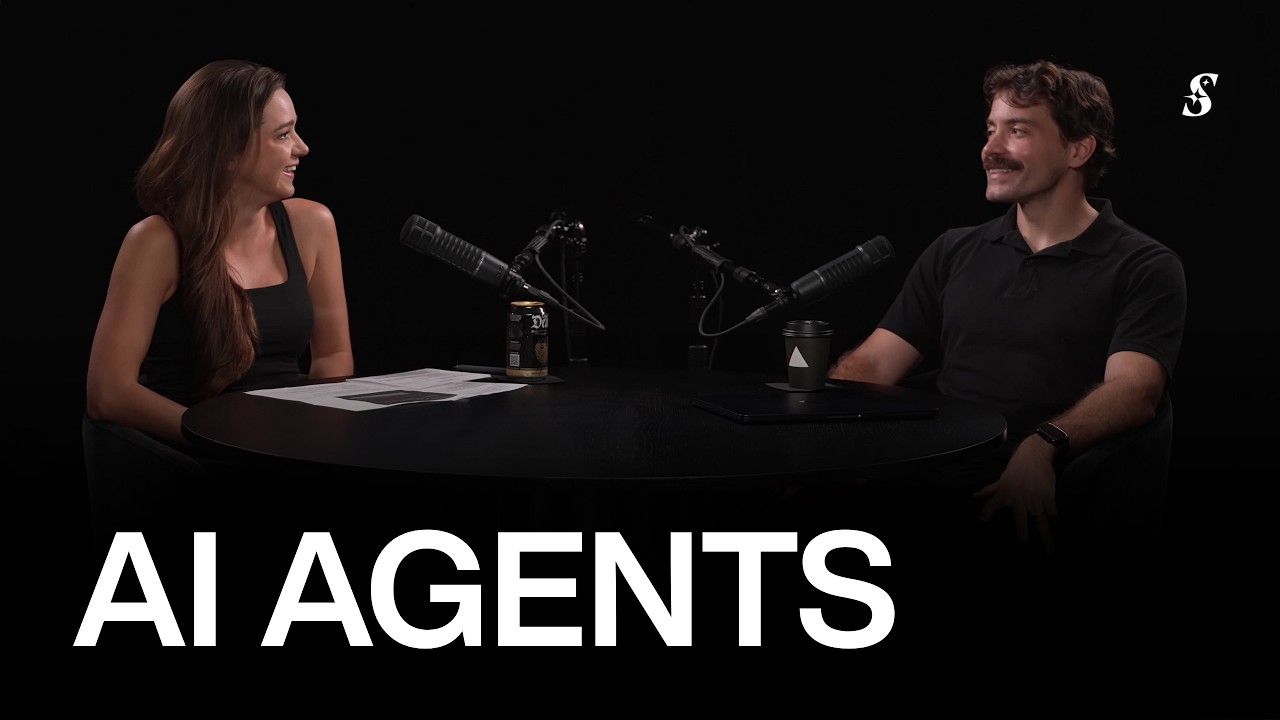
60% of Vercel Deployments Are Now Shipped by AI Agents
Oct 16, 2026 · 1:29:09
Vercel CEO Guillermo Rauch argues AI agents, not humans, are becoming the internet's primary users — and Vercel the infrastructure they choose. Coding agents went from 3% to 60% of Vercel deployments in a year, and the $9.3B-valued company reports $600M annualized revenue and 485,000 paying teams. He says engineers now manage agents like engineering managers, enterprises will generate personalized software instead of buying SaaS while Salesforce survives as data infrastructure, and websites must retool for agents via MCP. Vercel's AI Gateway shows 80% of tokens flow to open models — frontier labs, he argues, face fleeting loyalty and crypto-like froth. He details a $1M sandbox bounty that surfaced a critical Linux vulnerability and predicts fluid compute as serverless's next chapter.

USV’s New $900M Fund: Fred Wilson, Rebecca Kaden & Mike Mignano
Oct 8, 2026 · 1:25:14
Union Square Ventures partners Fred Wilson, Rebecca Kaden and Mike Mignano explain why the firm broke its small-fund discipline to raise $900M, its largest fund cycle ever, as bigger AI outcomes and costlier rounds demand larger checks. Wilson says AI today looks like the internet in 2003: infrastructure is built, but defining applications remain unbuilt. The partners detail 'obliterate, don't automate'—an AI lawyer, accountant or doctor instead of a human one—arguing incumbents can't copy it because it cannibalizes their business. Wilson calls ARR a 'fake metric,' favoring usage retention, and says single-digit-billion exits still return well at USV's fund size. The 'Rebel Alliance' thesis backs open-source AI infrastructure, and Mignano argues chatbots won't replace the user interface.

Inside AppLovin’s $100B Ad Engine
Aug 14, 2026 · 1:26:38
AppLovin CEO Adam Foroughi and CTO Giovanni Ge explain how AppLovin rebuilt its ad engine with Axon 2 after a 92% post-IPO stock drop, driving recovery from $5.5B to a $100B+ company. Ge details replacing tree-based models with neural embeddings so predictions became more accurate and GPU-cheaper, and says Axon 2's success came from deciding what not to build. Foroughi describes keeping engineering at ~100 people, using AI to elevate rather than replace engineers, expanding from mobile gaming into e-commerce via a napkin-designed data pipeline, and moving ads into connected TV and open web. They discuss why AI-generated ads need human guardrails, why taste matters more than building speed, and the path to a trillion-dollar valuation requiring $30B+ annual cash flow, plus buybacks during the downturn.
Powered by PodHood